
Selling globally means your customers expect to see prices in their local currency. With WooCommerce Multilingual & Multicurrency (WCML), you can easily configure and manage multiple currencies in your WooCommerce store, creating a seamless shopping experience across different regions.
This guide will walk you through the full setup of multicurrency functionality using WCML in currency-only mode. It’s also fully compatible with WPConfigurator so your customized product prices automatically adjust based on the selected currency, offering a seamless and localized shopping experience.
Let’s get started with configuring your store for multicurrency and maximizing your global sales potential.
Requirements (Currency-Only Mode)
To use WCML for multicurrency support without multilingual translations, you only need:
- WooCommerce (installed and activated)
- WooCommerce Multilingual & Multicurrency (WCML)
→ Available from wpml.org
→ Also available from wordpress.org
Step 1: Install and Activate WCML
-
- Go to Plugins → Add New → Search for WooCommerce Multilingual & Multicurrency, install and activate it.
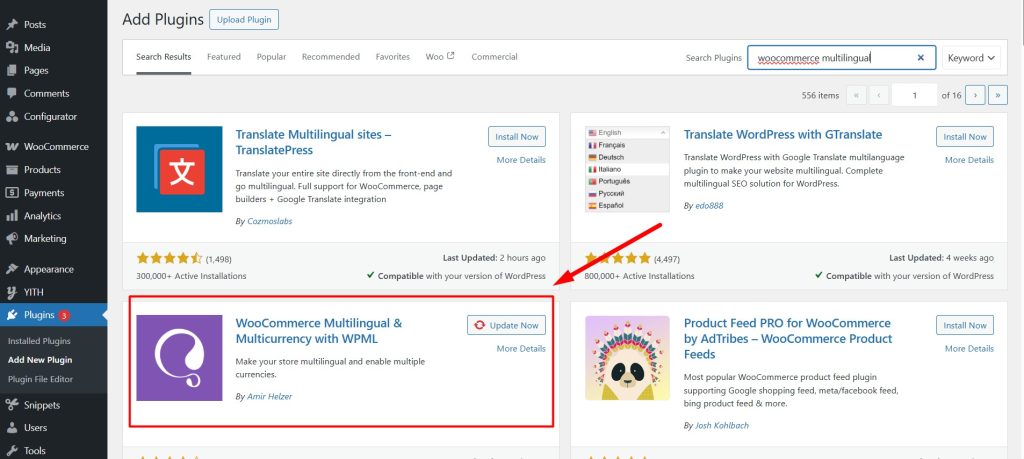
- Once activated, WCML will detect WooCommerce and enable multicurrency options.
- Go to Plugins → Add New → Search for WooCommerce Multilingual & Multicurrency, install and activate it.
Step 2: Enable Multicurrency
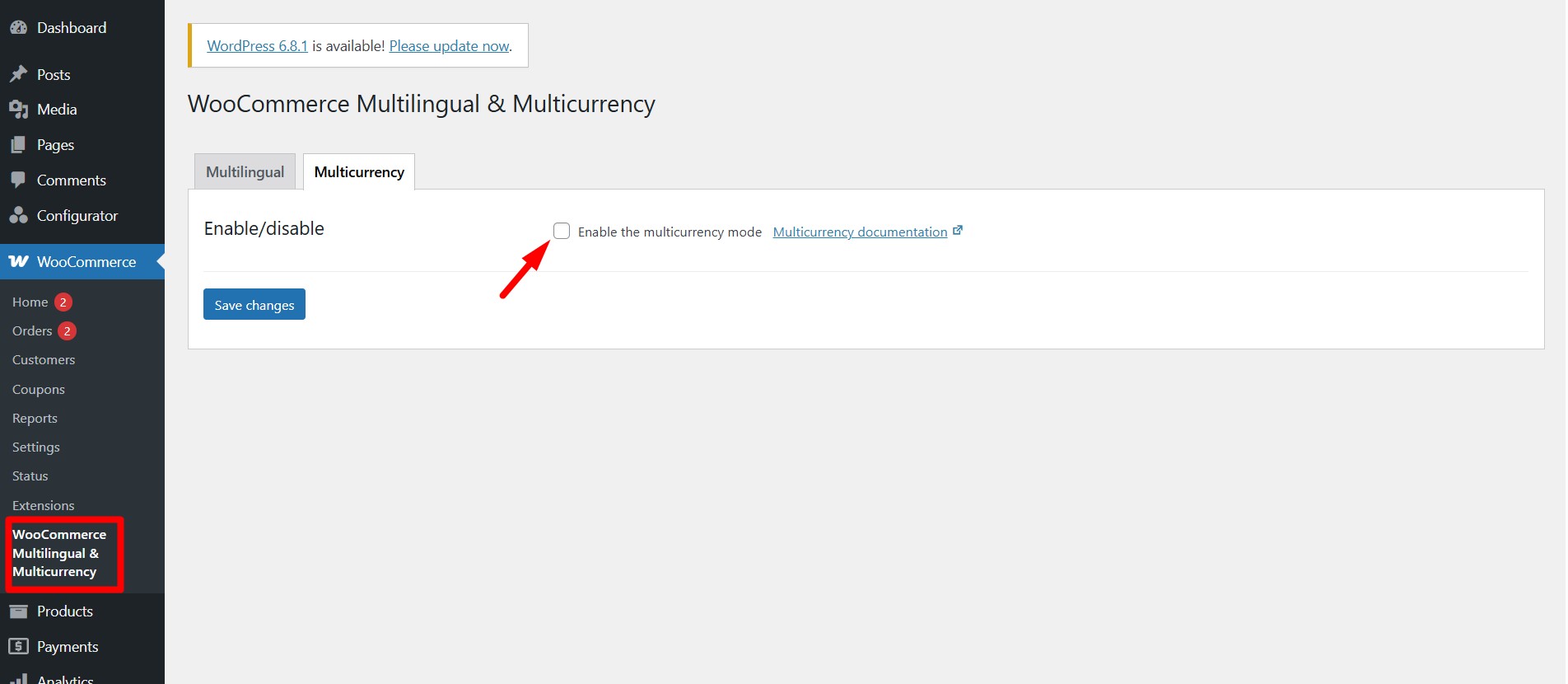
- Go to WooCommerce → WooCommerce Multilingual & Multicurrency.
- Click on the Multicurrency tab.
- Enable Multicurrency mode if it’s not already active.
Use live exchange rates by connecting a service like Fixer.io or Currency Layer (API key required).
Step 3: Add and Configure Currencies
- In the Multicurrency section, click Add currency.
- Select your desired currency (e.g., USD, EUR, PHP).
- Configure:
- Currency symbol
- Symbol position (left, right, with or without space)
- Decimal/thousand separators
- Number of decimals
- Exchange rate (manual or automatic)

Step 4: Adding Currency Switcher
Once you set up multiple currencies, display a currency switcher in your site’s theme using a widget.
To add a currency switcher as a WordPress classic widget:
- Go to WooCommerce → WooCommerce Multilingual & Multicurrency and click on the Multicurrency tab.
- Scroll to Widget Currency Switcher and add a new currency switcher widget to desired location.

Step 5: Save Changes to apply all settings.
Final Notes
- You do not need WPML Multilingual CMS for multicurrency.
- WCML in currency-only mode keeps your store simple but powerful for international selling.
- You can add translations later if needed—WPML plugins are modular and work well together. Visit our WPML Integration Guide
Resources